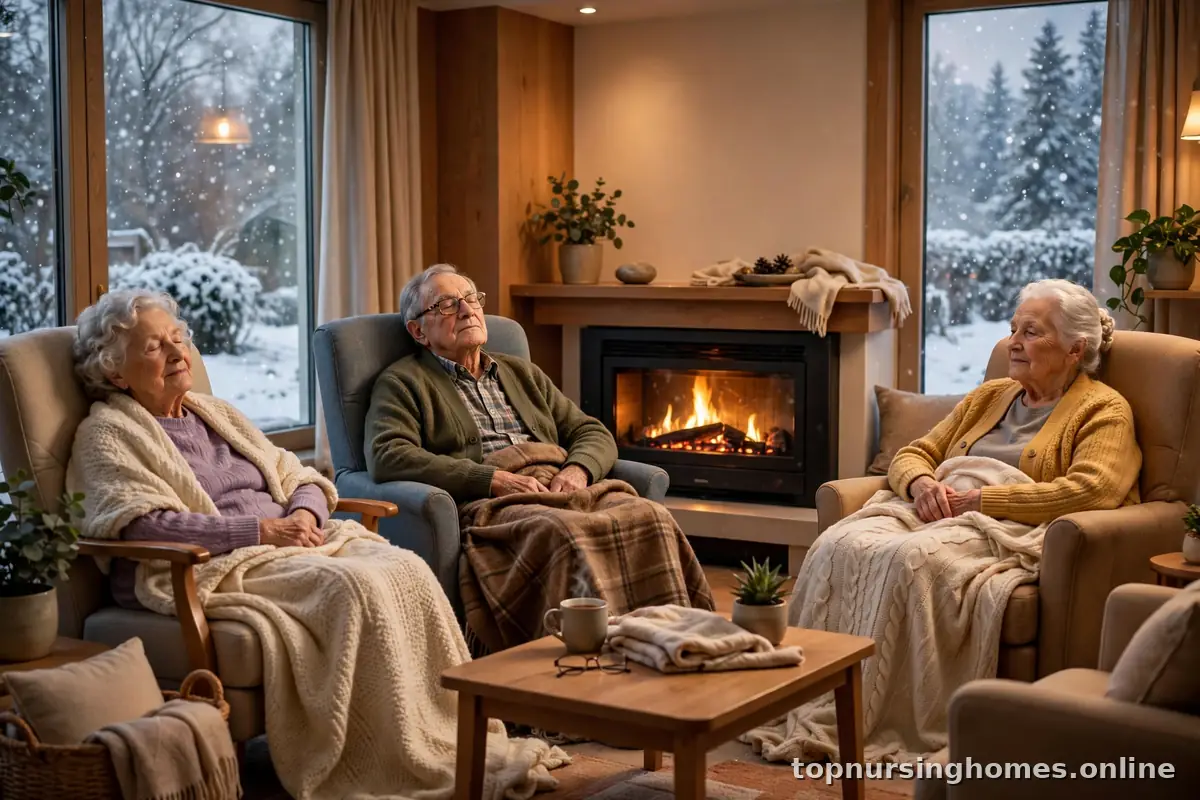
Winter changes the risk picture for people living with dementia. Cold weather, early darkness, icy walkways, dry indoor air, and holiday-season disruptions to routine all combine into a season that demands extra attention — whether your loved one lives in a memory care facility or at home with family support. The good news is that most winter risks are predictable, which means families and providers can plan for them instead of reacting to them.
This guide covers the winter-specific safety concerns most relevant to memory care residents, what thorough providers do about them, and what families can do and ask. It is general information, not medical advice — questions about a specific person’s health should always go to that person’s physician.
Why Winter Raises the Stakes
Several factors converge in winter. People with dementia may not recognize cold as dangerous, may not dress appropriately for the temperature, and may wander outdoors in unsafe conditions — a risk that turns serious quickly in freezing weather. Shorter days and less sunlight can disrupt sleep and mood. Heating systems dry the air, which can aggravate skin and respiratory comfort. Icy entrances and parking lots raise fall risk for residents, visiting family members, and staff alike. And storms can disrupt staffing, deliveries, and power — the infrastructure a facility depends on.
None of this means winter in memory care has to be frightening. It means winter is the season to ask sharper questions and confirm that plans exist before the first storm, not after.
Wandering and Cold-Weather Elopement
Unsafe wandering is a year-round concern in dementia care, but winter makes it potentially life-threatening. A resident who exits a building in summer may be found quickly; in freezing temperatures, the margin for error shrinks dramatically. This is one of the strongest arguments for the secured environments that define memory care — if you are still deciding on a setting, our introduction to memory care explains how those secured units work.
Ask providers: How are exits monitored and secured, especially during shift changes and busy visiting periods like the holidays? What is the protocol if a resident cannot be located — how quickly is a search initiated, and are local authorities notified? Are outdoor areas still accessible in winter, and if so, how is safe access supervised when it is cold or icy? Are residents’ winter clothing needs assessed — does each resident actually have a warm coat, hat, and gloves available, or is that assumed to be the family’s job?
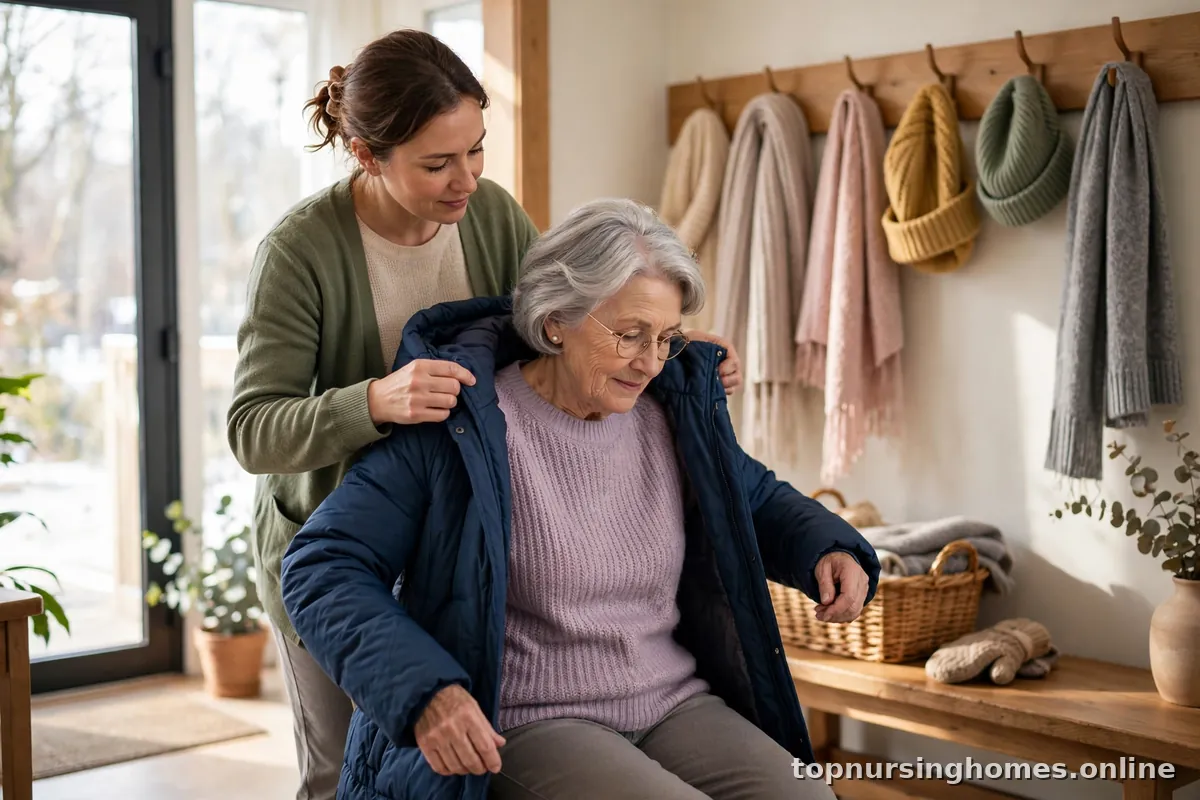
For families with a loved one at home: consider door alarms or chimes, keep a recent photo and description handy in case you ever need to alert neighbors, and let trusted neighbors know about the wandering risk before winter arrives. Discuss any safety technology with the person’s physician and family — the goal is protection with dignity, not surveillance.
Falls, Ice, and Mobility
Fall risk rises in winter both outdoors and indoors. Outside, ice and snow on walkways, entrances, and parking areas are the obvious hazard. Inside, wet floors from tracked-in snow, bulky winter clothing that changes balance, and dimmer lighting in the early dark afternoons all contribute.
Ask providers: What is the snow and ice removal plan for walkways, entrances, and the parking area — who is responsible, and how quickly does it happen after a storm? Are entryway mats and drying stations maintained to keep floors dry? Is lighting adequate in corridors and outdoor paths during the early-dark winter afternoons? How are residents assisted with outdoor transitions — for example, when going to appointments or family outings?
Footwear matters more than people think. Sturdy, non-slip, well-fitting shoes make a real difference; ask whether the facility checks that residents have appropriate winter footwear, and consider it part of your own pre-winter checklist for a loved one at home.
Heating, Air Quality, and Indoor Comfort
Memory care residents spend most of winter indoors, so the indoor environment carries the season. Heating systems should maintain comfortable, consistent temperatures — ask what temperature the unit is kept at and how it is monitored, since people with dementia may not report feeling cold or overheated. Very dry heated air can cause skin irritation, nosebleeds, and general discomfort; ask whether the facility monitors humidity or uses humidification in resident areas.
Heating safety is also worth a direct question: How are space heaters handled — are they prohibited in resident rooms, and what is the policy on electric blankets? What is the facility’s fire safety plan, and when was the last drill? These are standard questions, but winter is when heating equipment gets the heaviest use, so the answers matter most now.

Nutrition, Hydration, and Seasonal Illness
People tend to drink less water in winter, and people with dementia may not recognize thirst reliably at any time of year. Dehydration can cause confusion, which in a person with dementia can be mistaken for a worsening of their condition — another reason to discuss any sudden changes with the person’s physician promptly rather than assuming they are “just the dementia progressing.”
Ask providers: How is hydration encouraged in winter — are warm drinks offered regularly, and is fluid intake tracked for at-risk residents? How are seasonal illnesses handled — what is the policy on flu and other respiratory illness outbreaks, visitor screening during outbreak periods, and vaccination clinics for residents? How are families notified when an illness is circulating on the unit?
For up-to-date guidance on staying healthy in congregate care settings during respiratory virus season, the Centers for Medicare & Medicaid Services at cms.gov and Medicare’s Care Compare at medicare.gov/care-compare are the official reference points — use them alongside, not instead of, the provider’s own policies.
Storms, Power Outages, and Emergency Preparedness
Winter storms can knock out power, block roads, and strand staff. A memory care provider’s emergency plan is not paperwork — it is the difference between a difficult night and a dangerous one. Ask:
What is the backup power situation? Does the facility have a generator, what does it power (heating, lighting, medical equipment, kitchen, elevators), how much fuel is kept on site, and when was it last tested under load?
How is staffing maintained during severe weather? Is there a plan for essential staff to stay on site during storms, and how are gaps covered if people cannot travel?
How are families informed during an emergency? Ask for the specific communication method — a phone tree, text alerts, a status page — and make sure your contact information is current in their system.
What supplies are stockpiled? Food, water, medications, incontinence supplies, and heating fuel should all have multi-day reserves. Ask how many days the facility can operate self-sufficiently.
Residents in long-term care settings have federally protected rights that do not pause for weather — including rights around safety, dignity, and communication with family. If you are unsure what protections apply, read the plain-English guide to nursing home resident rights before winter storm season begins.
Mood, Daylight, and Keeping Routine Through the Holidays
Shorter days mean less natural light, which can affect sleep patterns and mood — particularly for people whose internal routines are already fragile. Good winter programming compensates: bright common areas during the day, consistent wake and sleep times, and daytime activities that keep residents engaged rather than napping through the dark afternoons.
The holidays add another layer. Festive decorations, schedule changes, excited visitors, and unfamiliar faces can be overstimulating for some residents — while for others, familiar music and family presence are genuinely comforting. Ask how the facility handles holiday programming: Are decorations kept calm and consistent rather than chaotic? Are families encouraged to visit in smaller groups or at quieter times? Can you bring familiar items — a favorite blanket, family photos, a well-loved playlist — to make the season feel personal rather than institutional?
A Family Winter Checklist
Whether your loved one is in memory care or at home, run through this list before the cold sets in: Confirm the provider’s winter emergency and communication plan in writing. Check that warm clothing, non-slip footwear, hats, and gloves are available and labeled. Verify your emergency contact details are current with the facility. Ask about the flu-season visitor policy so holiday plans are not a surprise. For a loved one at home, review heating safety, door alarms, and who checks in daily during storms.
Winter also tends to coincide with benefits and enrollment periods, which makes it a natural moment to review how care is being paid for. If costs are a concern, our overview of Medicaid and long-term care eligibility basics explains the general landscape — though eligibility rules vary by state and deserve a conversation with a qualified counselor.
Visiting Your Loved One in Winter
Winter visits need a little extra planning. Call ahead during storms to confirm the facility is accessible and that visiting hours have not changed. Dress for the parking lot, not just the lobby — icy lots are where most visitor injuries happen. Keep visits calm and unhurried: shorter, more frequent visits often work better than long holiday gatherings that tire everyone out. If you are taking your loved one out for a family meal or event, confirm the outing plan with staff in advance, dress them warmly in layers, and keep the outing short enough that it does not disrupt their sleep routine. And if you notice anything concerning during a visit — a cold room, a resident without adequate clothing, slippery floors — raise it with staff right away, politely and specifically. Winter vigilance from families is part of what keeps the whole community safe.
General information only — not medical or legal advice. Always verify with licensed professionals.
Winter asks more of everyone in the dementia care circle — providers, staff, and families. The season’s risks are real but manageable: secure the environment against cold-weather wandering, keep walkways and floors safe, maintain warmth and hydration indoors, plan for storms before they arrive, and protect the daily rhythm that keeps residents steady. Ask the questions now, while the weather is still mild, and discuss any health concerns with the person’s physician. A well-prepared winter is simply a safe, comfortable one — and that is exactly what your loved one deserves.