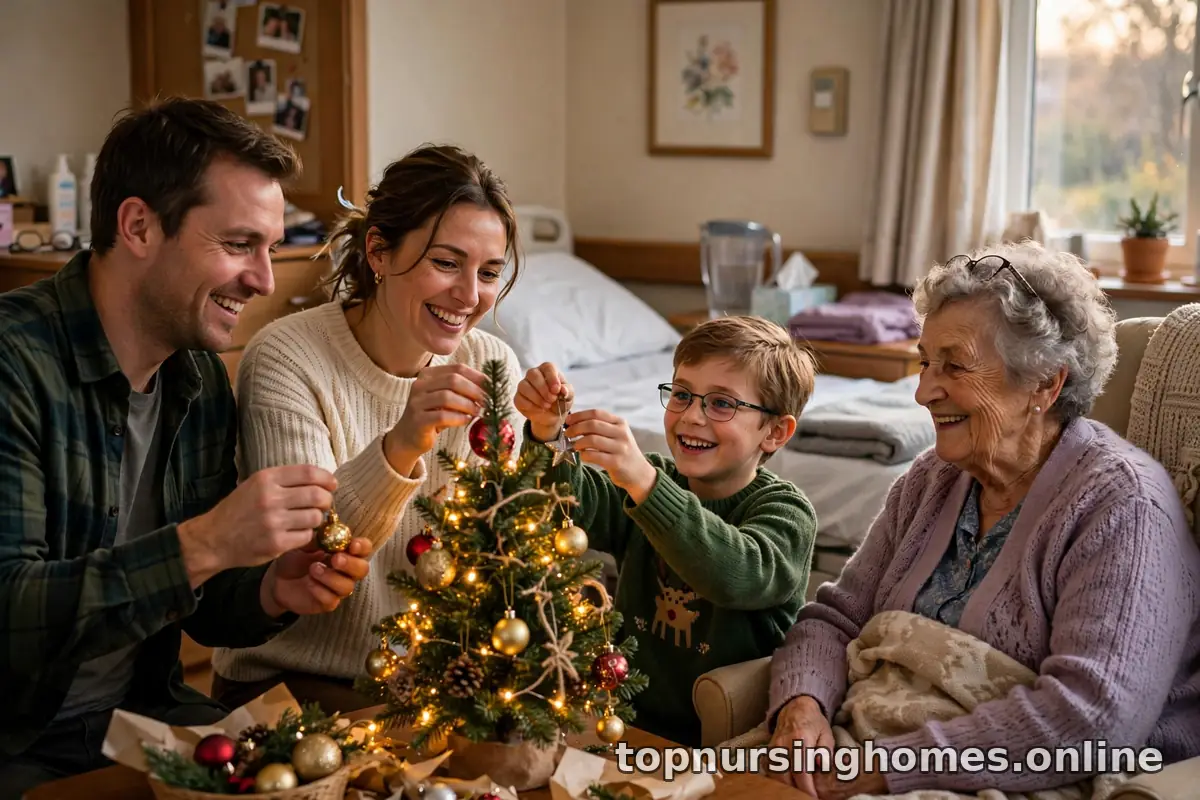
The first holiday season after a parent moves into a nursing home arrives with a particular ache. The house that hosted forty Thanksgivings feels too quiet. The chair at the table sits empty. And the question hangs over everything: how do we do the holidays now? The answer, learned by thousands of families, is both simpler and sweeter than you’d expect — you bring the holiday to them, you adjust the traditions instead of abandoning them, and you discover that joy turns out to be portable.
This guide covers the practical side (facility rules, food, gifts, decorations) and the emotional side (grief, guilt, and the complicated feelings of a season built on togetherness). Whether you’re planning a big family visit or a quiet afternoon, you’ll find ideas here that work in the real world of nursing home life.
First: check the facility’s holiday rules
Before you plan anything festive, make one phone call to the activities director or front desk. Holiday policies vary more than families expect, and a five-minute call prevents most disappointments. Ask about:
- Visiting hours during holidays. Many facilities extend hours on major holidays; some have special event schedules that you’ll want to join rather than compete with.
- Food policies. Can you bring homemade dishes? Are there restrictions for residents on special diets? Can the family share a holiday meal in a common room or private dining space — and does it need to be reserved?
- Decoration rules. Most facilities welcome decorations but restrict live candles, certain lights, or anything that blocks hallways and sprinklers. Ask what’s allowed in the room versus common areas.
- Outing policies. Can you take your loved one out for the day or overnight? What paperwork or notice is required, and are there health conditions that make outings inadvisable? Get the answer in writing if an overnight stay is planned.
- Illness protocols. Holiday season is flu and cold season. Ask about the facility’s visitor health screening — arriving with a cough, even a mild one, may mean being turned away, and that’s a kindness to every resident there.
If you’re comparing facilities with an eye toward how they handle family life and celebrations, our guide on assisted living vs. nursing home differences explains what to look for in each setting’s approach to resident life. You can also check any facility’s official inspection and staffing record on Medicare’s Care Compare before the holidays arrive.
Festive visit ideas that actually work
Forget the magazine-perfect holiday. In a nursing home, the best celebrations are simple, sensory, and unhurried. Aim for warmth, not production value.
Low-key celebrations with big impact
- Decorate the room together. A small tree, window clings, a string of battery lights, holiday cards taped to the wall — decorating together is the activity, not just the preparation. Residents who participate in decking their own space feel ownership of the season instead of being spectators to it.
- Bring the familiar smells. Scent is the strongest memory trigger we have. A familiar holiday candle (battery-operated, per the rules), a batch of the cookies they always baked, a sprig of pine — these do more emotional work than any decoration.
- Do a holiday craft side by side. Simple ornament-making, signing cards for other residents, assembling a small gift basket for a neighbor. Giving, not just receiving, restores a sense of purpose.
- Watch the classics together. Holiday movies, a televised parade, a concert on a tablet — shared viewing with hot cocoa (or whatever warm drink is allowed) is a complete celebration.
- Sing, or just listen. If the facility hosts carolers or a holiday music hour, go. If your family sings, a short, cheerful round of familiar songs in the room — or even the hallway — will draw smiles from neighboring residents too.
- Take holiday photos. A family photo in front of the little tree, silly or sweet, becomes a keepsake. Print one on the spot if you can and hang it immediately — instant joy on the wall.

Gifts that work in nursing home life
Gift-giving needs a rethink when someone lives in one room with limited storage and specific needs. The best nursing home gifts are consumable, comforting, or connective:
- Comfort items: a soft throw blanket, warm slipper socks with grips, quality hand lotion, lip balm. Practical luxury beats decorative objects every time.
- Connection gifts: a digital photo frame pre-loaded with family pictures, a simple large-button radio, a subscription to a large-print magazine they enjoy.
- Taste gifts: their favorite tea, good chocolate, specialty snacks — always checked against dietary restrictions first.
- Experience gifts: a scheduled outing, a professional family photo session at the facility, a “coupon book” of promised visits and calls.
- Gifts to avoid: anything requiring significant storage, strong fragrances (shared air), complicated electronics without a tech-support plan, and large quantities of perishable food.
One beloved tradition worth starting: a holiday card campaign. Ask extended family and friends to each mail a card. A resident who receives thirty cards in December feels remembered by the whole world — and the wall of cards becomes the season’s best decoration.
Holiday food: navigating the delicious minefield
Food is the emotional center of most holidays, and it’s also where nursing home realities collide hardest with tradition. Many residents are on modified diets — low sodium, diabetic-friendly, soft foods, thickened liquids — and a well-meaning plate of the full traditional feast can be genuinely unsafe.
The strategy: coordinate with the dietary staff, not around them. Call ahead and ask what your loved one can safely enjoy. Many facilities will happily plate a holiday version of the resident’s approved diet, or let the family supplement a facility holiday meal with approved treats. If you’re sharing a meal together in a private dining room, ask the kitchen what’s possible — some facilities will even prepare the family’s meal alongside the resident’s.
For residents who can eat freely, a small taste of home — the specific stuffing, the pie they always loved — is worth more than a banquet. And always check before bringing alcohol; most facilities prohibit it regardless of the occasion.
Taking your loved one out for the holiday
An outing — to a family home for dinner, or even just a drive to see the lights — can be magical. It can also be exhausting or medically inadvisable. Be honest with the care team and with yourself: can your parent handle the transfer, the stimulation, the late evening? A two-hour afternoon visit at home often works better than an all-day marathon. Bring medications, a change of clothes, and a clear plan for getting back before fatigue sets in. And have a graceful exit strategy — “we’ll head back before the traffic” beats a meltdown at 9 p.m.
When you can’t be there in person
Not every family can be present for the holidays — distance, work, health, or money get in the way, and the guilt can be crushing. But absence on the day doesn’t have to mean absence from the season. What matters to residents is feeling remembered, and that can be delivered many ways:
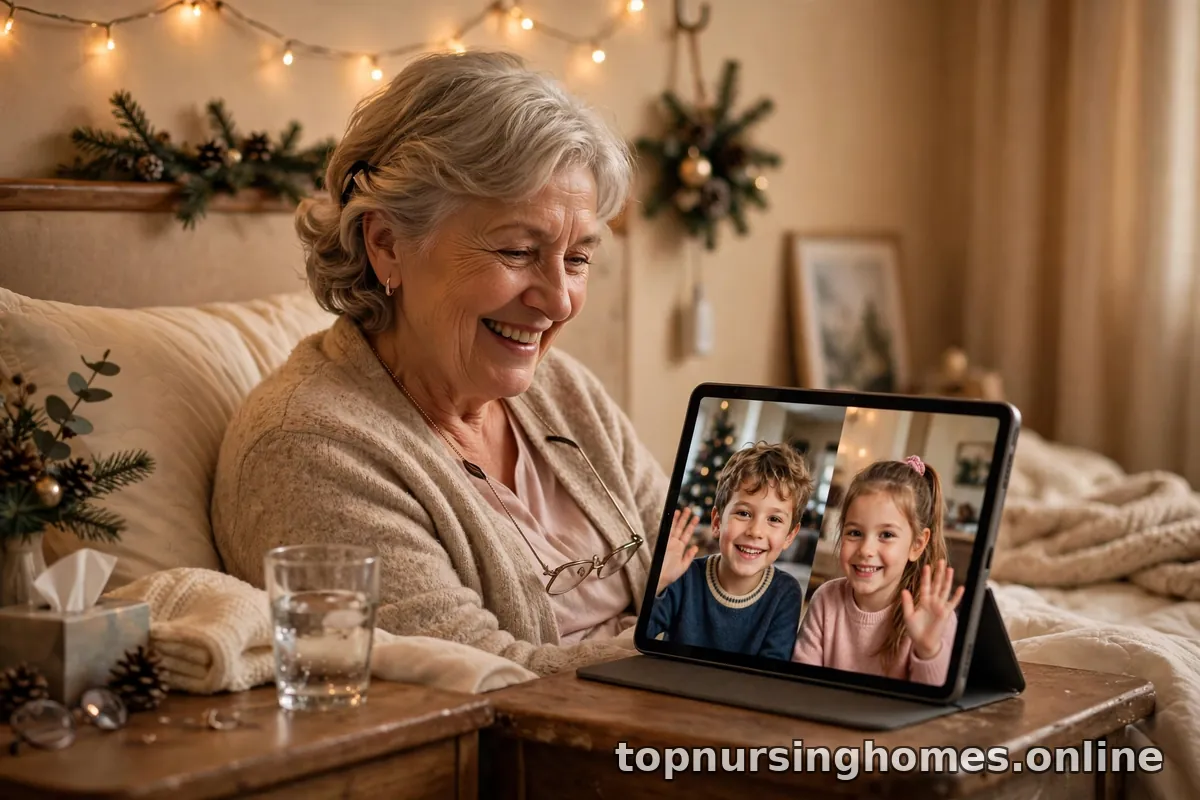
- Schedule a video call for the holiday itself. Coordinate with staff on timing, and make it an event: the whole family gathered around the screen, a toast, the kids showing off. It’s not the same as being there, but it’s real togetherness.
- Send a holiday care package early. Time it to arrive a few days before the holiday so the anticipation builds. Include a handwritten letter — in an age of texts, a letter is treasure.
- Recruit a holiday buddy. Ask your local contact, a friend, or even a volunteer visitor to stop by on the holiday itself. Many communities have volunteer programs that visit isolated seniors during the holidays — the facility social worker will know, and the Eldercare Locator at eldercare.acl.gov can connect you with local programs.
- Send holiday sounds. A recorded message from the grandchildren, a playlist of family-favorite songs, a video of the house decorated. These can be replayed all season.
- Call the nurses’ station on the day. A quick “how is she doing today?” call tells staff this resident has family thinking of her — and gives you peace of mind.
Our long-distance caregiving guide has a full playbook for staying connected across the miles, including emergency planning for the winter months.
Navigating the season’s big emotions
Let’s name what the holidays stir up. For your loved one: grief for the life they had, sadness at being “put away” during family time, possibly confusion about why everything changed. For you: guilt that could power a small city, grief for the traditions that are gone, and sometimes resentment — at siblings, at the situation, at the unfairness of aging itself.
A few honest strategies:
- Let the holiday be different. Trying to perfectly recreate the old Thanksgiving in a nursing home room will disappoint everyone. New traditions — the facility’s holiday party, a new recipe, a different day — can become genuinely beloved within a year or two.
- Name the elephant gently. “I know this isn’t how we pictured the holidays” said out loud is a relief. Pretending everything is fine when it isn’t helps no one.
- Watch for seasonal depression. Shorter days, holiday hoopla that highlights loss, and disrupted routines hit nursing home residents hard. If your loved one withdraws, stops eating, or loses interest in visits, tell the care team — seasonal mood changes are treatable, not inevitable.
- Include, don’t isolate. The instinct to “protect” a frail parent from holiday chaos by not bringing them often backfires. Most residents would rather be tired from joy than rested from loneliness. Include them in the noise, at their pace.
- Give yourself the same grace. You are doing a hard thing in a hard season. The guilt means you care; it doesn’t mean you’re failing.
Families new to nursing home life often find the first holiday the hardest part of the adjustment. If the move itself is still fresh, our guide to helping a parent transition to a nursing home covers the emotional first weeks. And when you’re evaluating whether a facility truly supports family life, knowing how to read CMS five-star ratings helps you look past the brochure.
After the holidays: the quiet weeks matter too
Here’s something experienced families know: January is harder than December. The decorations come down, visitors vanish, the days stay short, and the contrast with holiday attention can feel like abandonment. Plan for it. Schedule your January visits now, while the holiday warmth is fresh. Keep one small ritual going — the Sunday call, the Thursday visit — straight through the winter. The families who navigate the holidays well are often the ones who remember that the season after the season needs them most.
General information only — not medical or legal advice. Always verify with licensed professionals.
The holidays will be different this year — that’s the truth, and there’s no point pretending otherwise. But different is not lesser. A small tree in a nursing home room, a grandchild’s handmade card taped to the wall, the smell of familiar cookies, your hand in theirs during the carols — these are not consolation prizes. They are the holiday, distilled to what it always was: people who love each other, choosing to be together. Bring what you can, adjust what you must, and let the season do its work.